
Growing Flowers to Bring Inside
What the garden was always asking of me

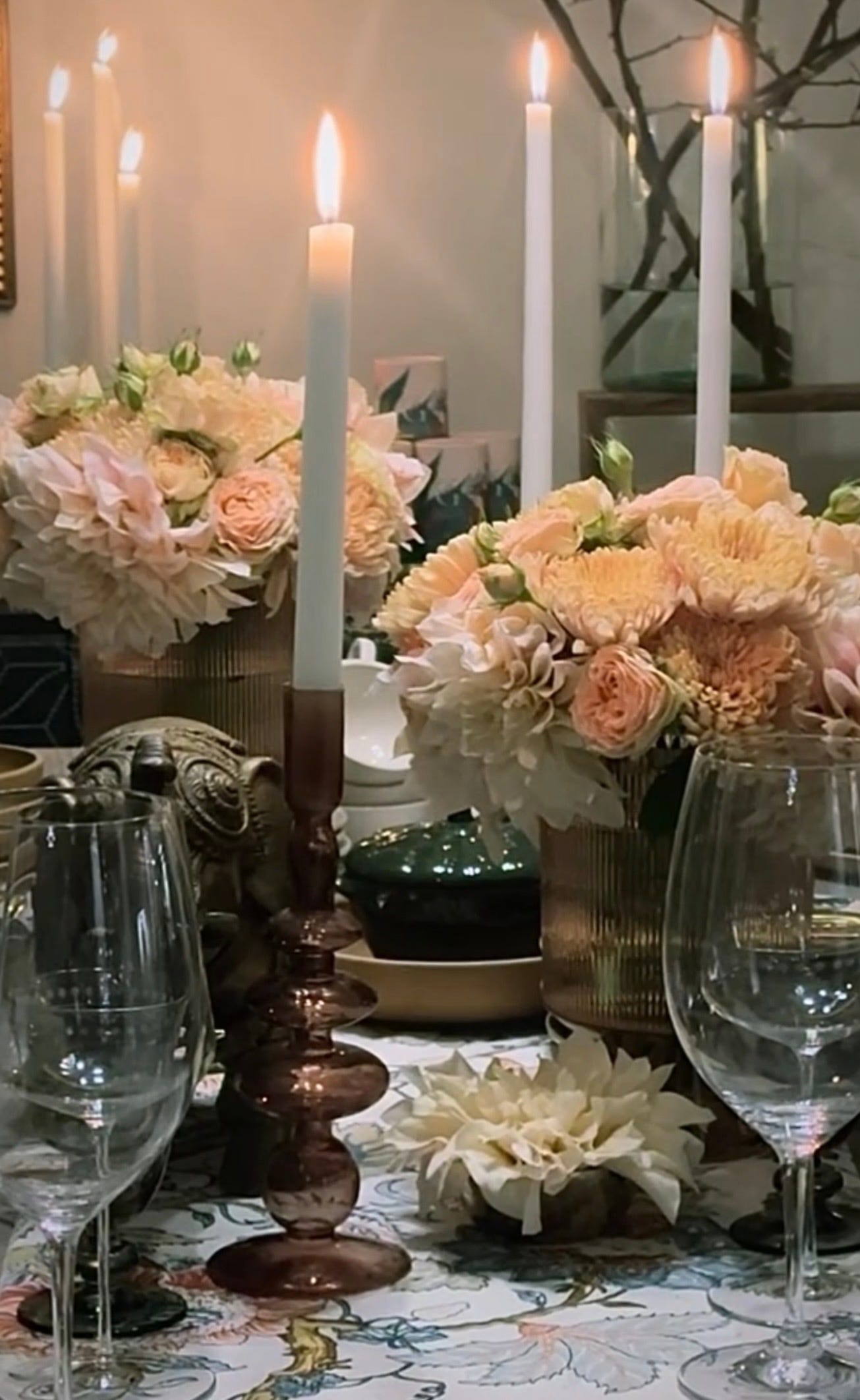
I have always dragged nature indoors.
Long before I had a garden of my own, I was finding ways to live surrounded by growing things. There was the apartment with no outdoor space, not a balcony, not a fire escape, nothing - and so I filled the kitchen windowsill, then the counter, then the whole corner of the room with potted plants. Ferns and trailing pothos and herbs that had no business being as lush as they were given the light I was offering them. It was pure magic, that little indoor garden. It was also, I understand now, a kind of longing made visible.
I would find windblown branches on morning walks and cram them into my car. I would pull over for Queen Anne's lace and wild daisies growing along the roadside, gathering them into grocery store bouquets wrapped in a spare kitchen towel. There was no system to it. It was pure instinct — something in me that couldn't leave beauty outside when I could bring it in.
Then I had a garden of my own. And for a long time, I couldn't bring myself to cut a single flower from it.
I had grown them from seed or tended them from bare root, watched them push up through the clay soil of a Georgia spring, counted the buds before they broke open. They had taken so much patience. Cutting them felt like interrupting something. Like ending something.
But here is what the garden slowly taught me, in the way that gardens teach you things - not all at once, but incrementally, through seasons: I had planted it for exactly this reason. Every rose climbing the fence, every stem of foxglove reaching toward the sky - they were always meant to come inside. The cutting garden was not a diminishment of the garden. It was the garden's highest purpose.
There is a philosophy at the heart of ikebana, the Japanese art of flower arranging, that I keep returning to: the idea that a cut flower is not dying, it is simply entering a different stage of its life. You are not ending the flower when you bring it inside. You are moving it from one kind of beauty into another. The garden continues in the vase.
I think about this when I cut dahlias in late summer, their stems still warm from the sun, and carry them into the kitchen. I think about it when I strip the thorns from a rose grown in my own soil and place it in a simple glass of water on the table where we eat dinner. There is something almost devotional about it - the act of bringing something so alive, so impermanent, into the space where we gather.
The flowers will last a week, maybe ten days if I'm diligent about the water. And then they'll be gone. But the table will have held them. The room will carry the memory of their scent. And the garden, unhurried and unbothered, will keep making more.
That is the gift I didn't know I was planting for.
We spend so much of our lives trying to hold onto beautiful things past their season. We preserve and press and photograph, as though documentation might soften the ache of impermanence. But flowers refuse that bargain entirely. They make no pretense of lasting. A dahlia cut on a Tuesday will tell you plainly by Saturday that it is leaving. And somehow, that honesty is what makes it so alive while it's here.
I have learned more about presence from flowers than from almost anything else. The rose on my kitchen table asks nothing of me except that I notice it. It does not need to be remembered. It does not need to become anything other than what it is right now, this color, this scent, this particular way the late afternoon light catches the outer petals as they begin to loosen and fall.
There is a kind of joy available only in things that end. The Japanese have a word for it - mono no aware - the bittersweet awareness of impermanence, the gentle sadness and deeper sweetness of knowing that this moment is passing even as you are inside it. Cherry blossoms are its symbol precisely because they are so brief. You do not mourn the cherry blossom. You love it more fiercely because it will be gone.
I think my whole life I have been practicing this without knowing it. Every roadside daisy tucked into a water glass. Every windblown branch arranged in a tall vase in the corner of a room. Every flower I finally allowed myself to cut from my own garden and carry inside - I was learning, slowly, that beauty is not diminished by its ending. It is completed by it.
The garden will keep blooming. I will keep cutting. And every stem I bring through the door is a small act of faith - that loveliness is worth receiving even when you know it will not stay.
Perhaps that is enough. Perhaps that has always been enough.