
INHERITANCE IN A BOWL
This is Kerala in a pot. This is my inheritance—complicated, layered, carrying histories I didn’t choose but have claimed anyway.

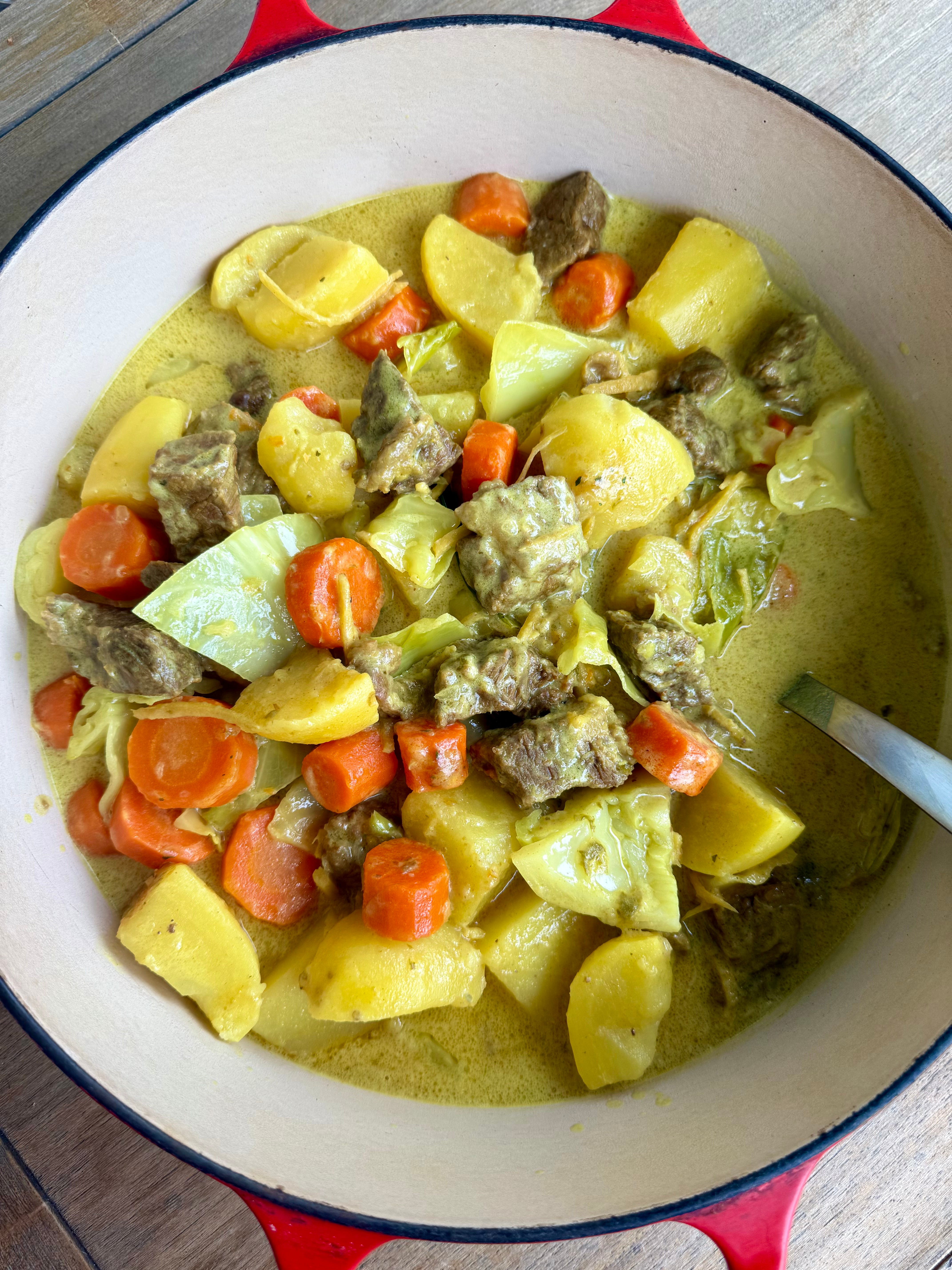
I carry Kerala in my bones—those fishing communities on the southwestern coast of India, a state run by a socialist government where education and creativity were woven into the very fabric of our existence.
The landscape was impossibly lush—pristine beaches gave way to mountains where the air was scented with tea and cardamom. Elephants roamed wild. Lakes bloomed with lotus flowers. Beauty was everywhere, unavoidable, overwhelming. This is the land that still produces some of the best filmmakers and storytellers in India. Art wasn’t a luxury in Kerala; it was a birthright.
I grew up in a Catholic household. My last name is Gomez—a Portuguese name, worn by my Indian family for generations, a mark of colonization that took deep root in my South. Sometimes I wonder if I could trace back my lineage far enough to discover what our ancestral last name really was. What name did we have before the Portuguese arrived? Before the conversions? Before history was rewritten on our bodies and in our names?
But here’s what I remember most vividly about growing up there: the religious tolerance of the people and the land.
I woke up to the sound of church bells tolling.
At lunch, I heard the temple bells ring.
At supper, the echo of the call to prayer from the mosque drifted through the air.
To this day, when I return to the motherland, that is what moves me to tears, what makes my heart swell—not from nostalgia alone, but from the sheer beauty of a culture that is highly academic, rich in arts, and rooted in a society that embraces true secularism. Different faiths, living side by side, the sounds of our devotions mingling in the tropical air.
This beef stew recipe is synonymous with the history of that region I come from—and like my last name, it likely came with the Portuguese. The beef, the stew format itself, probably arrived with colonization and took root so deeply that generations later, we call it ours. We’ve made it ours.
The butcher came to town on Saturdays.
Everyone lined up to get their cuts of meat for that special Sunday meal. My mother Hazel and her sisters would go together—it was always the women, walking to the butcher, talking and laughing. In our home, it was beef. Always beef on Sundays. Beef and beef bones. They would bring it home wrapped in banana leaves, the meat still warm, marbled with fat—because this dish needs the richness, needs the unctuousness that only good beef with some fat can give.
Sunday morning, you’d wake to the smell.
Onions, ginger, garlic, green chilies, and curry leaves—cooking low and slow with the beef, the aromatics building layer upon layer of flavor. The kitchen would fill with steam and spice and the particular comfort of something simmering for hours, transforming tough meat into tenderness.
Later, potatoes would go in. Carrots. Cabbage. Not fancy vegetables, just what we had. What everyone had. Peasant cooking at its best.
And then, right at the end, the thing that made it Kerala—fresh coconut milk.
Not the stuff that comes out of a can. The real deal. Coconut milk we made that morning, grated by hand, squeezed through cloth until it ran white and rich. That coconut milk would go into the pot, turning the whole thing creamy and luscious, the way only fresh coconut milk can.
This was our pot-au-feu. Our Sunday comfort. Our history in a bowl.
Beef and beef bones, slow-simmered. The butcher’s Saturday delivery transformed into something sacred by Sunday afternoon. A dish that belonged to Kerala as much as the church bells and the call to prayer and the sound of temple bells at noon.
I live in Georgia now, far from the fishing community where I grew up. The landscape here is beautiful—a different kind of beauty. No mountains scented with cardamom, no lakes full of lotus flowers. But when I make this beef stew, I’m back there. I’m standing in my mother’s kitchen. I’m waking up to the sound of church bells. I’m tasting home.
The recipe has adapted, the way recipes do when you cross oceans. I use canned coconut milk now because that’s what’s available. I use jalapeños instead of the green chilies I grew up with. But the heart of it—the slow simmer, the layered aromatics, the beef falling apart, the vegetables soaking up all that rich, spiced broth—that hasn’t changed.
This is Kerala in a pot. This is my inheritance—complicated, layered, carrying histories I didn’t choose but have claimed anyway.
This is what I cook when I want to remember who I am.
I serve it with appam when I take the time to make them—those lacy-edged fermented rice pancakes that are perfect for scooping. Or with crusty French bread (the colonizers’ bread, again, fitting somehow) that soaks up all that rich, spiced, coconut-laced broth. The way the bread absorbs the goodness, every bite soaked through with flavor—it’s indescribable how good it tastes.
This is inheritance in a bowl. Every spoonful holds Kerala—the church bells and temple bells and call to prayer, my mother Hazel and her sisters walking to the butcher, the Saturday ritual that became Sunday’s comfort, the Portuguese name I carry, the dish they brought that we’ve made ours. All of it, together, in one bowl. All of it, somehow, home.
KERALA BEEF STEW
SERVES 6
INGREDIENTS:
2 pounds beef chuck (with some fat—this dish needs the richness), cut into 1/2-inch pieces
2 tablespoons coconut oil
2-inch piece fresh ginger, julienned
4 large cloves garlic, thinly sliced
1 medium red onion, roughly chopped
2 jalapeño peppers, split in four
2 teaspoons whole black peppercorns
2 teaspoons turmeric
1 tablespoon beef bouillon or salt to taste
3 medium carrots, cut into 1/2-inch pieces
4 medium Yukon gold potatoes, cut into 6 pieces each
1/2 head cabbage, cut into 1-inch pieces
1 cup beef broth
1 can (13.5 oz) coconut milk
INSTRUCTIONS:
Brown the beef: Heat coconut oil in a large, heavy-bottomed pot or Dutch oven over medium-high heat. Add the beef in batches (don’t crowd the pot) and brown on all sides. Remove and set aside.
Build the aromatics: In the same pot, reduce heat to medium. Add the ginger, garlic, onion, and jalapeños. Cook, stirring occasionally, for about 3 minutes until fragrant.
Add the spices: Stir in the whole black peppercorns, turmeric, and beef bouillon (or salt). Let the spices bloom in the oil for a minute until fragrant.
Slow simmer the beef: Return the beef to the pot. Add the beef broth. Bring to a gentle boil, then reduce heat to low. Cover and let it simmer gently for 1 hour, stirring occasionally, until the beef is tender. If the liquid reduces too much, add a bit more broth or water.
Add the vegetables: Add the carrots and potatoes. Stir to combine. Cover and cook for another 20 minutes until the potatoes are almost tender.
Add the cabbage: Stir in the cabbage pieces. Cover and cook for another 10 minutes until the cabbage is tender but not mushy.
Finish with coconut milk: Pour in the coconut milk, stirring gently to combine. Let it heat through turn off the flame—don’t let it boil vigorously or the coconut milk may separate. Taste and adjust salt as needed.
Serve: Ladle into bowls and serve with rice, appam (if you can find them), or crusty bread.
NOTES:
About the beef: Chuck roast is ideal because it has enough fat to stay tender during the long simmer. Don’t use lean cuts—you need that richness.
Curry leaves: If you can find fresh curry leaves at an Indian grocery store, add a sprig when you’re building the aromatics. They add an authentic Kerala flavor that’s hard to replicate.
Fresh coconut milk: If you have access to fresh coconuts and want to go the traditional route, grate the coconut meat, squeeze it through cheesecloth with a bit of warm water, and use that instead of canned. It makes a difference.
Spice level: The jalapeños add heat, but it’s gentle heat that builds the flavor rather than overwhelming it. If you want it milder, remove the seeds before adding them to the pot.
Make ahead: This stew is even better the next day after the flavors have had time to meld. Store in the refrigerator for up to 4 days, or freeze for up to 3 months.
What to serve it with: Traditionally, this is served with appam (fermented rice pancakes). But it’s also beautiful with jasmine rice or just good crusty bread to soak up the broth.
What dishes connect you to home? What recipes carry your history? I’d love to hear about the food that holds your memories. Reply and tell me.